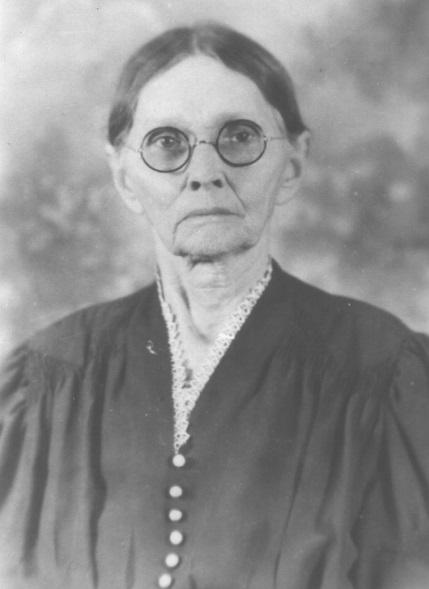
Showing posts with label Cleaning. Show all posts

Monday, July 17, 2017

Memory Monday: Some of the Ways They Did Things Back Then


my grandmother with one of her children

SOME OF THE WAYS THEY DID THINGS BACK THEN

I was reading a book recently—Things Mother Used to Make, published in 1913. My grandmother, who was married in 1922, might have done some of these things. Here are a few items from that book that I found interesting—especially compared to the way we do things today:
To Save Confusion in the Home "Plan your work, then work your plan."
Monday—Wash, if you have it done in the house. If sent out, use that day for picking up and putting things in order, after the disorder of Sunday.
Tuesday—Iron.
Wednesday—Finish ironing and bake; wash kitchen floor.
Thursday, Friday—Sweep and dust, thoroughly.
Saturday—Bake, and prepare in every way possible, for the following day.

Homemade Shortening
Do not throw away small pieces of fat from pork, lamb or steak. Put them on the stove, in a skillet or agate dish and cook them till there is nothing left, but scraps. Then pare a potato, wash clean, cut into thin slices and cook in the fat for a half hour to clarify it. Strain through a cloth. This will be good to fry doughnuts in and for all purposes, where shortening is needed, except for pie crust.
Pieces of fat, not fit for shortening can be saved in some old utensil and made into kitchen soap.

Never Throw away Old Underclothes
Keep them for housecleaning, for washing windows and for washing lamp chimneys. Old pieces of calico or flannel make good holders to use about the stove. Wash, boil and dry cleaning cloths when soiled, that they may be ready for use again.

To Keep your Hands White
Keep a piece of lemon in your bathroom or kitchen. It will remove stains from the hands.

Save your Old Stockings
Old stockings are fine for cleaning the range. Slip your hand into the foot and rub hard, or place an old whisk broom inside. It will make the sides and front of the range clean and shiny. In fact, you will seldom need to use blacking on these parts.

To Remove Disagreeable Odors from the House
Sprinkle fresh ground coffee, on a shovel of hot coals, or burn sugar on the shovel. This is an old-fashioned disinfectant, still good.

To Lengthen the Life of a Broom
Your broom will last much longer and be made tough and pliable, by dipping for a minute or two, in a pail of boiling suds, once a week. A carpet will wear longer if swept with a broom treated in this way. Leave your broom bottom side up, or hang it.

To Soften Boots and Shoes
Rub them with kerosene. Shoes will last longer if rubbed over with drippings from roast lamb. Old-fashioned people always used mutton tallow on children's shoes.


Now aren’t these wonderful hints. Do you think you will use any of them? Really, aren’t you happy that you live today and not 100 years ago?

Monday, March 6, 2017

Memory Monday: Tidbits from the Year My Great-Grandfather Was Born


My Great-Grandfather


TIDBITS FROM THE YEAR MY GREAT-GRANDFATHER WAS BORN

In my research, I recently came across some tidbits that I find really interesting—especially as I live in the 21st Century. We have always had a fridge with freezer, store-bought mattresses, and a short distance to any grocery story in town.
But back in the 19th Century, things were very different. I came across a book titled The Frugal Housewife from 1841 (the year my great-grandfather was born. Maybe his mother did some of the things listed in this book).

Suet and lard keep better in tin than in earthen.
Suet keeps good all the year round, if chopped and packed down in a stone jar, covered with molasses.
Pick suet free from veins and skin, melt it in water before a moderate fire, let it cool till it forms into a hard cake, then wipe it dry, and put it in clean paper in linen bags.
When mattresses get hard and bunchy, rip them, take the hair out, pull it thoroughly by hand, let it lie a day or two to air, wash the tick, lay it in as light and even as possible, and catch it down, as before. Thus prepared, they will be as good as new.
It is poor economy to buy vinegar by the gallon. Buy a barrel, or half a barrel, of really strong vinegar, when you begin house-keeping. As you use it, fill the barrel with old cider, sour beer, or wine-settlings, &c., left in pitchers, decanters or tumblers; weak tea is likewise said to be good: nothing is hurtful, which has a tolerable portion of spirit, or acidity.
Barley straw is the best for beds; dry corn husks, slit into shreds, are far better than straw.
Straw beds are much better for being boxed at the sides; in the same manner upholsterers prepare ticks for feathers.
Always have plenty of dish-water, and have it hot. There is no need of asking the character of a domestic, if you have ever seen her wash dishes in a little greasy water.
Have all the good bits of vegetables and meat collected after dinner, and minced before they are set away; that they may be in readiness to make a little savoury mince meat for supper or breakfast.
It is thought to be a preventive to the unhealthy influence of cucumbers to cut the slices very thin, and drop each one into cold water as you cut it. A few minutes in the water takes out a large portion of the slimy matter, so injurious to health. They should be eaten with high sea soning.
Poke-root, boiled in water and mixed with a good quan tity of molasses, set about the kitchen, the pantry, &c. in large deep plates, will kill cockroaches in great numbers, and finally rid the house of them.


Even though these tidbits are interesting to read, I am thankful that I have a French-door refrigerator, an adjustable bed with a really, really thick mattress that never needs to be taken apart and washed, and three nearby grocery stores.

Monday, September 5, 2016

Memory Monday: Modern Conveniences 100 Years Ago


WHO KNEW THEY HAD THESE “MODERN CONVENIENCES” A HUNDRED YEARS AGO?
All four of my maternal great-grandparents were born into Mennonite families in Russia before migrating back through Europe and finally settling in America. My grandmother’s parents are pictured above. I’m not sure when my great-grandmother came to America, but my great-grandfather was only two year old when he came. I know they married in 1889 in Kansas (Ancestry.com is such a wonderful resource).
All that was said to show what changes they lived through—from peasants to immigrants to farmers in the America. They would have been married for 27 years when the book, 1000 Shorter Ways Around the House, was published 100 years ago. I wonder what they thought about the modern conveniences they saw about them—either in the mercantile stores or in the catalogues. Below are a few of those modern conveniences from the book listed above:
An electric sewing machine motor is not expensive in comparison to its service for one who has much sewing to do. One is made which needs no adjustments requiring mechanical ability. The motor is placed on the machine next to the wheel and the plug attached to any electric light socket. With the pedal placed on the floor and a slight pressure of the toe the wheel starts. For rapid work the pressure should be a bit harder. The motor costs one half cent per hour to operate on high speed when the current rate is ten cents per kilowatt hour.
An electric hot-pad for warming the bed on cold nights. These are absolutely safe and sanitary as they are covered with a pad that can be washed.
A vacuum cleaner, which sucks up the dust and prevents it from flying all over the room, comes in many makes and care should be used in selecting one to see that it fits the needs of the owner, and that it is a good strong cleaner.
An ordinary electric hot-plate on which can be placed pots in cooking, an ordinary flatiron for heating, and to be used for any purpose requiring a flat hot surface.
An electric toaster is a most handy little device, and if the kind selected permits the toast to be held at any desired distance from the heat—by the use of hinged toast-holders—toast can be made hard or soft, brown or tan, with no trouble what­ever. Also, if the top of the toaster is a level top instead of having a handle attached, a coffeepot can be set on it and kept warm. There are many makes and they can be purchased from two dollars upward.
An electric coffee percolator permits coffee always to taste the same. It is an easy way and a wholesome way to make coffee. The percolator is valuable for other purposes than making coffee, as soup can be heated in it, water boiled, or it can be used for any other purpose for which any pot would be used.
A tubular flashlight as a substitute for the lamp light, and for use in traveling. It can be placed under the pillow at night and used at a second's notice.
An electric tungsten lamp of two candle-power which can be burned all night at a very low cost. It is very useful for sick-rooms, nurseries, and for the bathroom when a light is desired throughout the night. It can be adjusted to any electric light bulb.
While we still use the items from 100 years ago—nightlight, flashlight, coffee percolator (although I have Keurig now), toaster (for Pop Tarts), and vacuum cleaner (so my husband can keep the rugs clean), I have no use whatsoever for this last item.
A knife for curling ostrich feathers can be pur­chased for a small sum and one can be one's own milliner as far as this art is concerned.
Which of the modern conveniences from 100 years ago are you happiest about having today?

Monday, August 1, 2016

Memory Monday: More Household Hints from the Past

My Great-Grandmother

MORE HOUSEHOLD HINTS FROM THE PAST
I love looking at household hints from years ago. Here are some from a book, A Practical Cook Book, from 1899. My great-grandmother might have used some of these since she married my great-grandfather in 1895.
A little vinegar, boiled in a dish when cabbage and onions are cooking, will prevent the odor going through the house.
Wash the outside of poultry in warm water and soap, rinse it thoroughly, and wash the inside in clear water. Try it once.
To singe fowls, put 1 tablespoon of alcohol into a saucer, light it; this will singe 1 or 2 chickens without any smoke.
For a cough cure, take 1 red pepper, put water over it and let it stand on back of stove until the strength comes out, strain, and add 1 1-2 cups sugar, and 1-2 cup vinegar; let it simmer until thickened.
Wash gilding with water in which an onion has been boiled, and dry with a soft cloth.

Remove ink from white goods with ripe tomato.

I think I have the most trouble with the last one, since I always have problems getting spots containing tomato (sauce, paste, juice, enchilada sauce, well anything with tomato in it) out of my white shirts. Who knows maybe tomatoes were different back then, but I don’t think so.

Monday, June 20, 2016

Memory Monday: How to Dress for Housework

My mother's paternal grandmother
HOW TO DRESS FOR HOUSEWORK—HAVE WE BEEN DOING IT WRONG ALL THESE YEARS?
After reading this article in the book Putnam's Household Handbook by Mae Savell Croy, published in 1916, I realize that I haven’t been wearing the right clothes for doing housework all these years. But that will all change now. Read the article and think of my great-grandmother above. Think she would want to exchange her long skirts and long-sleeved blouses for the gymnasium suit—she was married about 20 years when this book came out. See if you think you will change the way you do housework.
HOUSEWORK WITH THE AID OF A GYMNASIUM SUIT
A gymnasium suit worn during the morning hours when sweeping, dusting, cleaning, washing, or in fact, when doing any work where exercise of the body is practiced, will leave the wearer far less fatigued after her duties than when wearing a clumsy dress or heavy skirt, as is usually worn by housewives.
One is always nearly exhausted after a hard day's work on the day set aside for cleaning, but the adoption of this method of dress for doing housework enables the worker to do the work in less time and hardly feel the strain when the day is over. There is a certain amount of freedom felt in the gymnasium suit. If this is questioned let the reader visit a gymnasium class for adults and see the light-heartedness and care-free manner of the members while at their exercises. It makes one feel almost a child again. A heavy skirt is a handicap and is constantly in the way if one must climb up for dusting pictures or cleaning windows.
Too, it gathers much dust and grime and no skirt worn constantly for housework looks tidy very long. A light weight cotton union suit is all that is necessary for wearing under the suit. It is easy to get out of this costume into the tub when the work is finished and the wearer, instead of feeling tired and worn, is refreshed and brightened simply through having effected a change in dress.
The gymnasium suit gives free play to the muscles that are otherwise bound down by tight bodice and sleeves, and the weight removed from the body and lower limbs enables the wearer to move with rapidity and ease and to get the full benefit of the exercise taken in a very easy and comfortable way.
While it is really better to wear the suit without corsets, as is done in gymnasiums, if the wearer does not care to leave her corsets off, the suit is still far preferable to the old form of dress.
Aside from the freedom of the muscles and the light weight of the costume as compared to the dress and petticoats, it is a much more economical apparel than the dress. The suit can be made from five yards of fifty-cent serge, and two such suits will last with good hard wear a couple of years. They are easy to wash and iron and a great saving will be experienced in the laundry. The serge should be thoroughly sponged before being made up, in order to save the wearer the discomfort of the suit becoming too tight after being washed.
An outer skirt should be kept conveniently near to slip on over the gymnasium suit when the door bell rings or when tradespeople call, and a much neater appearance will be presented than to go to the door with a soiled cotton dress on, or a heavy shirt bearing spots from cooking.
As a last and very important argument in favor of the gymnasium suit, the disposition of the wearer will be immensely improved, for nothing will so quickly cause a woman who does her own work to become irritable and nervous as to be in a half exhausted condition while having to face the annoying little problems that come up daily in her home life.

Wait!!!! I just remember—I don’t do housework. My husband said he would do it so I could have time to write. Now, I wonder if he wants me to get him a gymnasium suit so he can feel refreshed after he finishes all the housework. Nope, I don’t think I’ll even ask him. I know he’ll prefer his jeans and tees. Which is fine with me as long as he keeps cleaning.

Monday, May 23, 2016

Memory Monday: Modern Conveniences of the Time

My maternal great-grandmother
My great-grandmother was born in Russia and came to America as part of the great Mennonite migration.  She married in 1889 while living in Kansas. I’m not she ever read the book 1000 Shorter Ways Around the House: A Handbook of the Horne, The Building, the Furnishing and the Work Therein by Mae Savell Croy, published in 1916. I’m not even sure she could read English. I know her daughter (my grandmother) could. But even if my great-grandmother couldn’t read about these modern conveniences, she might have seen them in the local mercantile.
As you read through these new-fangled items, what do you think about them? Would you like to use them? Would they help you and save time in your day?
For keeping food warm a hot water platter is most satisfactory as the lower vessel can be filled with hot water and a plate set on this any length of time without injury to the china. They are very cheap in price.
A combination mayonnaise mixer, egg beater, and churn comes in glass, enabling one to see just when the ingredients are properly mixed. They are in various sizes and at different prices.
An egg fryer made of aluminum and shaped so that the sections containing the eggs do not rest directly upon the stove is made with a long handle, and each egg being in a separate compartment is cooked in nicely rounded shape.
An excellent dish-washer is a string-mop with a rectangular brush set in one side. The tool is small enough to allow the mop to be used for washing cups and glasses, while any material that has a tendency to stick can be loosened by means of the brush. Dishes can be washed rapidly by it without a dish pan and with merely a fine stream of hot water from the faucet. Only silver and glassware require drying.
An inexpensive silver-clean-pan renders the task of cleaning silver an easy one. The process of cleaning is merely to put a little salt and soda in hot water and pour into the pan and let the silver soak in the solution for half an hour. If it is then washed with soapy water no tarnish will remain.
A gas-saver consists merely of a piece of sheet metal lined with asbestos. When placed over a gas-flame, three irons can be more evenly heated than over the burner alone and in less time. Four irons can be heated and kept going on ironing day.
I think these items should stay in the books as curiosities of a bygone era. Give me a microwave, a dishwasher, stainless steel flatware, and NO asbestos, thank you very much.
What are your thoughts on these modern conveniences?

Monday, May 2, 2016

Memory Monday: Dental Care

My great-grandmother

ALL FOR THE CARE OF THE TEETH
I love to watch the tv show “Survivor.” One of the interesting things I have noticed is the way they take care of their teeth while they are on the island. You can often see one of them scraping his or her teeth with a small stick. I guess that is the best way to keep your teeth clean when you don’t have a tooth brush and toothpaste.
Personally, I like my electric tooth brush and Arm and Hammer or Crest toothpaste. All this led me to research how our ancestors cleaned their teeth. Now, I knew that there hasn’t been toothpaste for all that many years (understand, I’m in my sixties, so I’m talking about “all that many years” before my parents were born), but I found a couple of recipes for making tooth powder that my great-grandfather might have used as he fought in the Civil War in the 1860s. Of course, my great-grandmother might have use some of this powder also, since she wasn’t born until 1862. The following is from a book that came out in 1858 and is titled INQUIRE WITHIN FOR ANYTHING YOU WANT TO KNOW OR OVER THREE THOUSAND SEVEN HUNDRED FACTS WORTH KNOWING. (Don’t you just love titles like this—ones that explain the “real” title?)
Here are the recipes:
AMERICAN TOOTH POW DER. — Coral, cuttle fish-bone, dra gon's blood, of each eight drachms; burnt alum and red sanders, of each four drachms; orris root, eight drachms: cloves and cinnamon, of each half a drachm ; vanilla, eleven grains ; rosewood, half a drachm; rose pink, eight drachms. All to be finely pow dered and mixed.
QUININE TOOTH POWDER.—Rose pink, two drachms; pre cipitated chalk, twelve drachms; car bonate of manesia, one drachm ; qui nine (sulphate), six grains. All to be well mixed together.

I don’t know what most of the things in the recipes above are and I don’t think I want to know. Just the thought of everyone in the family sticking their damp toothbrush in to the same jar of tooth powder does funny things to my stomach, especially when I know that some of them chewed tobacco. Let’s just say that I’m happy to have the tubes of white paste that I can squeeze out of a tube—stuff that tastes like mint. Yep, I’m really happy to use what we have today, and everyone in our house has their own tube.

Monday, April 18, 2016

Memory Monday: Household Hints from the Past (and my comments)

My maternal grandmother
HOUSEHOLD HINTS FROM THE PAST AND MY COMMENTS
Recently I came across an interesting book as I was researching—Willy Lou's House Book. It was published in 1913, when my maternal grandmother was only eleven years old. I wonder if her mother (one of my maternal great-grandmothers) used any of these hints or if she had other ways of handling the same things. I know I have other ways of dealing with them or thoughts about the way they did it back then. See my comments in bold following each hint.
To Remove Ink
Chloroform will remove ink stains from white goods if used before laundering. Buttermilk also will usually remove ink stain. If the chloroform doesn’t work, you will never know since you will be asleep. But then again as you fall asleep, you might knock over the buttermilk you had in reserve and it will clean the ink stain—MC.
Fish-Bone in Throat
A fish-bone can be dislodged from the throat by using a gargle of vinegar, the acid dissolving the bone. This one I wonder about—how long does one have to gargle in order for the acid to dissolve the fishbone—MC.
To Kill Cabbage Odor
When cooking cabbage or cauliflower place a cup of vinegar on the stove. It will help to kill the odors and also keep the flies away. A few spices may be dropped in the vinegar if liked. I love this one. I keep imagining what the kitchen is like—the smell of cooked cabbage or cauliflower battling the fragrance of hot vinegar with the scent of cinnamon or allspice acting as referee, all the while watching flies buzzing around at a safe distance outside the kitchen—MC.
To Smooth the Flat-Iron
When the starch sticks to the flat-iron, rub on a piece of fine wire screening. The screening may be placed on a paper on the ironing board and the iron rubbed over it. This is better than scraping with a knife and saves time. Wax in a cloth is also good to rub the iron with. I won’t be able to use this hint since I don’t have a flat-iron. Actually, I don’t have a flat-iron or an iron. You might say my dryer is my iron. The clothes go in damp and come out wrinkle-free, and if I forget about them and they are left too long and get wrinkled, I just toss in a damp towel and run them again (and again if I forget again)—MC.
How to Iron Clothes
When ironing never use a dirty sheet on the ironing board or the clothes will be a bad color. This one makes me ask what made the sheet dirty in such a way that it will leave a bad color—MC.
Marking Medicine
All medicine bottles and boxes should be plain ly labeled and nothing ever taken in the dark. Do not keep poisons with other drugs in the medicine cabinet. Poisons should have a place of their own far from drugs intended to be taken inter nally. There is not enough care paid to this. Little bells can be tied to bottles containing poi sons. The bell will always ring when moved. While I think is the best tip—bells on poison bottles, the thing is that I don’t have bottles of poison, and I don’t have a medicine cabinet. But still a good idea—MC.
To Clean Pillows
Feather pillows should be washed occasionally to keep them sweet, fresh and light. This is quite a task, but it well repays one. Make a bag of strong muslin, larger than the pillow-ticking. Stitch all around, leaving an opening of about a half yard. Open the pillow about the same distance. Take the bag in your lap, leaving the heavy pillow on the floor in front of you. Place the bag over the pillow, baste to gether carefully and then stitch down. Shake the feathers into the muslin bag. Put your hand all around in the pillow-tick after separating from the muslin bag, to collect any feathers that may not have gone into the bag. Stitch the bag up tight. There should be plenty of room for the feathers to lie loosely. Have a good warm sudsy water in which there has been a little borax added to soften. Souse the bag up and down, and press softly with the hands. Repeat the process in different waters until the last water is clear, then you may know your feathers are clean. Run through a very loose wringer, so that the feathers will not be broken. Hang in the hot sun. The bag containing the feathers must be hung out each day for several days, say ten days, as it takes a long time for feathers to dry perfectly, and then the air helps to lighten them. Have your pillow-ticking washed and ready for the feathers when dry. Many times pillows have been thought worn out and this treatment has made them quite as good as new. This is a better treatment than a com pressed air process. July is a good month for this work as the sun is hot. Hang the bag on a line so that there is a better circulation of air through the feathers. Forget this hint. I just will buy a new pillow—MC.

Well, I hope you enjoyed my look into the past, along with my thoughts. Do you have any comments about these hints, or do you have hints of your own from the past?

Monday, February 1, 2016

Memory Monday: Things from the Past and My Thoughts on Them

My Daddy with his sister and cousin

THINGS FROM THE PAST AND MY THOUGHT ON THEM
My daddy is in the picture above—he’s the one in the middle with the modified bowl haircut. The book Things My Mother Made (published in 1913) came out a few years before he was born. Maybe his mother followed some of the advice in the book. Some of these things were common knowledge back then. As I read through this book, several things caught my eye and I wanted to share them. Items from the book are in bold and my thoughts are in-between.
AUTHOR'S FOREWORD
Good food depends as largely upon the judgment of the cook, as upon the materials used. These recipes and Household Hints are written very plainly, for those who have had no experience, no practice and possibly have little judgment.
I love that last part--“possibly have little judgment.”

To Save Confusion in the Home
"Plan your work, then work your plan."
Monday—Wash, if you have it done in the house. If sent out, use that day for picking up and putting things in order, after the disorder of Sunday.
Tuesday—Iron.
Wednesday—Finish ironing and bake; wash kitchen floor.
Thursday, Friday—Sweep and dust, thoroughly.
Saturday—Bake, and prepare in every way pos sible, for the following day.
We have a different schedule:
Monday-Tuesday my husband does something, I write
Wednesday—grocery shopping, I write (or search the internet)
Thursday—my husband does laundry, I write
Friday—my husband sweeps, dusts, mops and does the bathroom, I write
Saturday—whatever
Sunday—Church and enchilada for Sunday Dinner (blog post on enchiladas coming)
Yep, I like my schedule better.
To Remove Disagreeable Odors from the House
Sprinkle fresh ground coffee, on a shovel of hot coals, or burn sugar on the shovel. This is an old-fashioned disinfectant, still good.
Today, I’d just spray some Febreeze.
To Soften Boots and Shoes
Rub them with kerosene. Shoes will last longer, if rubbed over with drippings from roast lamb. Old-fashioned people always used mutton tallow on children's shoes.
Wonder what the shoes would smell like in the hot sun?
When you Go Away from Home for a Few Days
Plan your meals before leaving. This simplifies matters for the one left in charge.
But isn’t that what McDonald’s and pizza delivery are for?
When Pies are Ready to Bake
Put little dabs of lard, on the top crust, then hold it under the faucet, letting cold water run over it.
This one I just don’t understand. Why? Wouldn’t the lard drops be washed away? And wouldn’t the pie turn out soggy?
Never Leave a Glass of Water or Medicine, Un covered in a Room
This is very important. Water will absorb all the gases, with which a room is filled from the respiration of those sleeping in the room.
This one I thought was just interesting. But on second thought, wouldn’t it be better to leave out several glasses of water so they will absorb all those nasty gases and in the morning just pour out all that nasty water? Wouldn’t that leave the room cleaner? Just wondering.
I am so-o-o-o glad in live now and not back then.

What would your favorite time period to live in?

Monday, September 21, 2015

Memory Monday: Homemaker's Advice

My Daddy


HOMEMAKER’S ADVICE FROM MY GRANDMOTHER’S DAY
            I love to look at old books from the 19th and early 20th century, and recently came across a book from 1913 titled Things My Mother Used to Make. This book came out a little while after my grandparents married in 1910.
            Following is some of the things my grandmother might have done while she was married. Unfortunately, she passed away in 1926 when my dad was only nine years old, so I never got to know her.

Homemade Shortening
Do not throw away small pieces of fat from pork, lamb or steak. Put them on the stove, in a skillet or agate dish and cook them till there is nothing left, but scraps. Then pare a potato, wash clean, cut into thin slices and cook in the fat for a half hour to clarify it. Strain through a cloth. This will be good to fry doughnuts in and for all purposes, where shortening is needed, except for pie crust.
Pieces of fat, not fit for shortening can be saved in some old utensil and made into kitchen soap.  pg. 88.
To Try out Lard
If you want good sweet lard, buy from your butcher, leaf lard. Skin carefully, cut into small pieces and put it into a kettle or sauce pan. Pour in a half-cupful of water, to prevent burning, and cook slowly, until there is nothing left but scraps. Remove the scraps with a skimmer, salt it a little, and strain through a clean cloth, into tin pails. Be sure not to scorch it. p. 90.
How to Keep Eggs
In the summer, when eggs are cheap, buy a sufficient number of freshly laid ones to last through the winter.
Take one part of liquid glass, and nine parts of cold water which has been boiled, and mix thoroughly.
Put the eggs into a stone crock, and pour over them this mixture, having it come an inch above the eggs. The eggs will keep six months, if they are perfectly fresh when packed and will have no taste, as when put into lime water. p. 90.
To Remove Disagreeable Odors from the House
Sprinkle fresh ground coffee, on a shovel of hot coals, or burn sugar on the shovel. This is an old-fashioned disinfectant, still good. p. 91
To Lengthen the Life of a Broom
Your broom will last much longer and be made tough and pliable, by dipping for a minute or two, in a pail of boiling suds, once a week. A carpet will wear longer if swept with a broom treated in this way. Leave your broom bottom side up, or hang it. p. 91

When I read things like this about how women in the early 20th century did things, it helps me to see the grandmother I never knew and draws me a little closer to her when I read how she might have done things.


Most of the books I have used in this blog can be found at Google Books Advanced Search. If you are interested in seeing more from these books, go there and spend wonderful hours seeing how those who came before us lived.

Monday, September 7, 2015

Memory Monday: Dishwashing

My Great-grandmother Becker


Dish Washing Made a Pleasure
I keep reading from this book and see so-o-o many differences between my life and those who came before me. The following is from a 1913 book titled Things My Mother Used to Make. My maternal grandmother would have been about ten when this book was written. I’m not sure my great-grandmother really took pleasure in washing dishes for her large family.
Dish Washing Made a Pleasure, p. 104
First of all, remove all refuse from the dishes. Place them near the sink, large plates at the bottom, then the smaller ones, then saucers. Have a large pan full of very hot water. Make a good soap suds by using a soap shaker. Wash the tumblers and all glassware first, and wipe at once. Use a handle dish cloth (which can be bought for five cents), for these, as the water will be too hot for the hands. Wash the silver next. Have a large pan, in which to place the clean dishes, cups and bowls first. When all are washed pour over them boiling or very hot water, and wipe quickly. Pans and kettles come last. Always have a cake of sand soap or a can of cleaning powder, for scouring the pie plates and bottoms of kettles. It is very little work to keep baking tins and kitchen utensils in good condition, if washed perfectly clean each time they are used.
Wash the dish towels, at least once every day, and never use them for anything else. With clean hot water, clean towels, and plenty of soap dishwashing is made easy.
If you live in New England, your sink will be in front of a window. Be sure and plant just out­side of this window nasturtiums, a bed of pansies, morning glories and for fall flowers, salvia. These bright blossoms will add to your pleasure while washing dishes.

            I guess I’m missing something that make the above a pleasure. For us, we just  swipe anything left on the plates, then use the dishwasher (the electric one, not my husband). Afterwards, he puts them back in the cabinet. Now that’s a pleasure.